
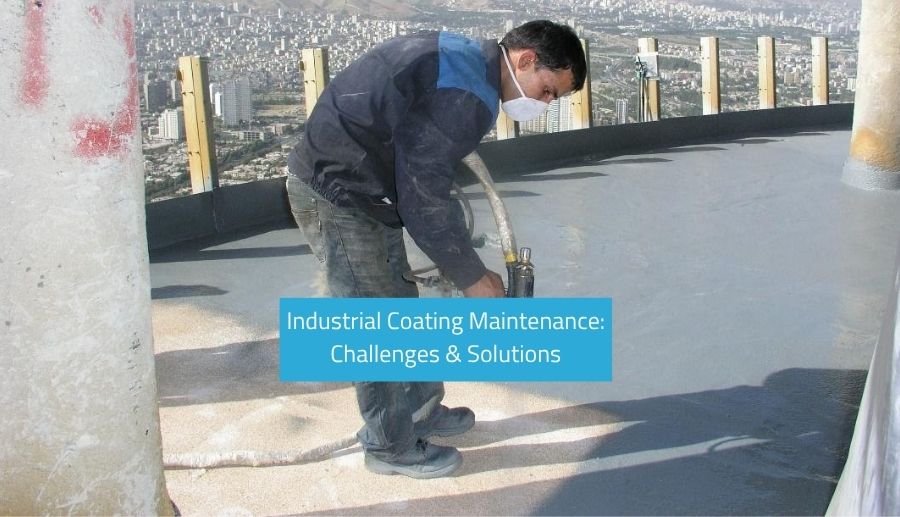
Industrial coatings serve as the first line of defense for critical infrastructure – from buried pipelines and storage tanks to water treatment systems and structural steel. When properly selected and maintained, these protective systems extend asset life by decades. Yet even the most sophisticated industrial coating systems can fail if maintenance challenges go unrecognized or unaddressed. Understanding the root causes of common coating failures and knowing how to respond with the right materials and methods, is essential for engineers, facility managers and asset owners who rely on long-term performance.
This article examines the most frequently encountered challenges in coating maintenance and presents the proven solutions used by leading professionals in the industry – drawing on best practices aligned with advanced industrial coating technologies and field-tested methodologies.
Polyurethane Coatings and Adhesion Failure: Causes and Proven Fixes on Steel and Concrete
Adhesion failure and delamination remain among the most common and costly maintenance issues in polyurethane coatings and polyurea systems applied to steel and concrete substrates. The primary cause is inadequate surface preparation – residual moisture, surface contamination, mill scale or an incompatible primer can all undermine bond strength from day one.
Proven solutions begin well before application. Surfaces must be blast-cleaned to the appropriate profile and primers must be matched to the topcoat chemistry. Dedicated primer systems, such as moisture-tolerant epoxy or polyurethane primers, act as a bonding bridge between the substrate and the protective film. When recoating is required, adhesion testing using cross-cut or pull-off methods should precede any new application to confirm compatibility with the existing system. Advanced coating systems that combine tailored primer formulations with high-build topcoats deliver the intercoat adhesion strength needed for long-term performance.
Elastomeric Coatings and Corrosion Undercreep: How to Protect Buried and Exposed Steel Pipelines
Corrosion undercreep is a particularly insidious problem for steel pipelines and structural assets where elastomeric coatings are in service. Even when a coating appears intact at the surface, corrosion can migrate laterally beneath the film from an edge, holiday or mechanical damage point. This subsurface progression weakens the steel substrate long before visible signs of failure appear.
High-build structural polyureas have become the preferred solution for buried and exposed steel pipelines in demanding environments. These formulations offer exceptional bond strength, low permeability and elongation properties that accommodate slight substrate movement without cracking. For pipeline coating systems in particular, applying a cathodic disbondment-resistant primer beneath a thick elastomeric film dramatically reduces undercreep risk. Specifying the right industrial coating system for the environment – whether buried, submerged or exposed – is the key decision that determines long-term corrosion resistance.
Read Our Article
The ROI of Robotic vs. Manual Coating ApplicationCoating Systems for Moisture Transmission: Solving Osmotic Blistering in Immersion and Water Applications
Osmotic blistering is a well-documented failure mode in immersion applications, buried concrete structures and potable water containment. When soluble contaminants remain beneath a coating film, osmotic pressure from moisture ingress creates localized blisters that eventually rupture and expose the substrate to direct water contact.
The most effective defence against moisture transmission is a barrier-grade coating system with extremely low water vapor permeability. Colloidal gel systems and specialised waterproof membrane products have demonstrated strong performance in water treatment facilities and below-grade concrete tanks. Advance coating systems for these environments incorporate multi-layer application protocols – typically a penetrating primer, a mid-coat build and a chemically resistant topcoat – that together create a near-impermeable barrier. Ensuring concrete surfaces are fully cured, clean and primed before application is equally critical, as residual moisture in green concrete is a leading cause of blister formation.
Industrial Coatings for Abrasion Resistance: Tackling Wear in Mining and Industrial Environments
Abrasion and mechanical wear accelerate coating degradation wherever slurries, aggregates or bulk materials contact coated surfaces. Mining operations ore chutes, hoppers and transportation systems routinely subject protective films to levels of wear that standard formulations cannot withstand.
High abrasion-resistant coating formulations address this challenge by incorporating reinforcing agents and flexible polymer networks that absorb impact and resist scoring. Polymer coating solutions engineered for abrasion service combine high Shore hardness with adequate elongation – a balance that prevents both surface scoring and brittle cracking under impact. Where ceramic content is added to the matrix, resistance to fine particle erosion increases substantially. Selecting the appropriate abrasion-resistant grade from a coating manufacturer with a proven track record in mining and industrial applications is essential for maximising service intervals.
Our Other Product
Structural Polyurea CoatingIndustrial Coating Systems and UV Degradation: Maintaining Exterior Performance Against Weathering
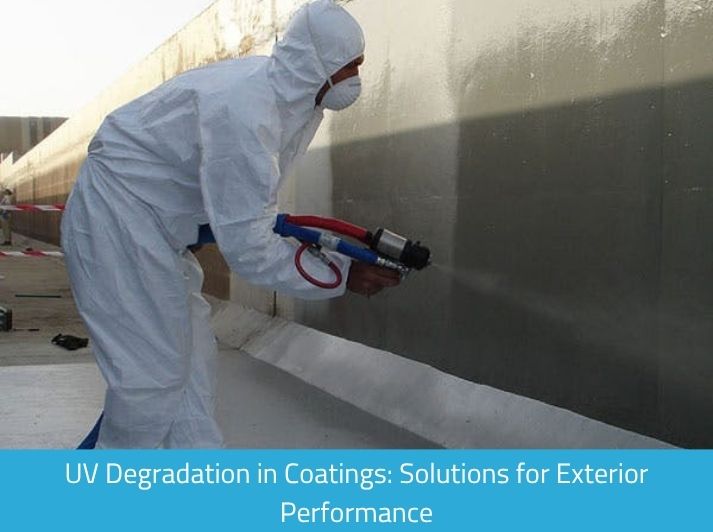
UV degradation is a persistent challenge for any coating exposed to direct sunlight. Aromatic polyureas and polyurethanes, while chemically robust, are inherently susceptible to UV-induced colour fade, gloss loss and surface chalking. Over time, this photo degradation can progress from cosmetic deterioration to genuine loss of film integrity.
Aliphatic polyurethane coatings provide the most effective defence against UV weathering. Unlike their aromatic counterparts, aliphatic systems maintain colour stability, gloss retention and surface hardness under prolonged sun exposure. For assets requiring both chemical resistance and UV stability, an aliphatic topcoat applied over an aromatic base coat combines the best properties of each chemistry. Partnering with an industrial coatings company that offers a full range of aliphatic options – including clear topcoat variants for colour-critical assets – ensures that maintenance specifications can account for the full UV loading of the deployment environment.
Read Our Article
Elastomeric Coating Production: Ensuring Quality and PerformanceChemical Resistance in Coating Systems: Protecting Petrochemical Tanks and Wastewater Assets
Chemical attack is among the most demanding performance requirements for industrial coatings. Petrochemical storage tanks, containment berms and wastewater digesters expose coating films to acids, alkalis, solvents, hydrocarbons and biological agents simultaneously. Standard epoxy or polyurethane systems often lack the chemical resistance needed for these environments, leading to swelling, softening and eventual delamination.
Chemically resistant polyurea hybrid formulations – engineered specifically for immersion in aggressive media – provide superior resistance to a broad spectrum of chemical exposures. For secondary containment and tank lining applications, specifying a system from an industrial coatings manufacturer with independent chemical resistance data is essential. The best systems combine low permeability, high cross-link density and flexibility to resist both chemical ingress and the mechanical stresses inherent in operational tank cycling. Sustainable coating systems in this segment have also advanced considerably, with water-based and low-VOC options now available that do not compromise chemical resistance.
Advanced Coating Systems for Recoating: Intercoat Adhesion and Compatibility Over Aged Films
Recoating aged or degraded coating systems is one of the most technically demanding aspects of industrial coating maintenance. Intercoat adhesion failures between an existing aged film and a new topcoat are common when compatibility is not verified and surface conditions are not properly assessed.
The proven approach involves three steps: chemical or mechanical surface reactivation to restore surface energy; pull-off adhesion testing to confirm the structural integrity of the existing film; and selection of a topcoat that is chemically compatible with the underlying system. Some advanced industrial coatings are formulated to bond directly over intact aged films without the need for full blast preparation – reducing both cost and downtime. Consulting an industrial coatings company with detailed intercoat compatibility data ensures that recoating specifications are built on tested, reliable foundations rather than assumptions.
Our Other Product
Asphalt-Extended Polyurethane Waterproofing MembraneCoating Manufacturer Best Practices: Inspection Scheduling and Specification Support for Long-Term Asset Life
Effective industrial coating maintenance is not reactive – it is planned, documented and executed on the basis of sound engineering principles. The two primary maintenance models are scheduled maintenance, based on predetermined intervals tied to expected coating service life and condition-based maintenance, driven by inspection findings and performance data collected in the field.
Inspection frequency should be matched to the criticality and exposure conditions of each asset segment. Immersion assets and buried pipelines warrant annual inspection, while exposed structural assets in moderate environments may be maintained on a three-to-five-year cycle. Inspection protocols should include visual assessment, holiday testing, adhesion measurement and dry film thickness verification as a minimum.
The emergence of coating equipment manufacturer partnerships has further elevated maintenance outcomes. Automated application and inspection equipment – including those developed in collaboration with robotic equipment manufacturers – improves film consistency, reduces human error and provides detailed application records that support long-term asset management decisions.
Conclusion
The challenges facing industrial coating maintenance – from adhesion failure and corrosion undercreep to UV degradation and chemical attack – are well understood and, critically, well-solvable. The key lies in matching the right coating chemistry to each specific challenge, implementing rigorous surface preparation and inspection protocols and supporting all of this with the engineering expertise of a proven industrial coatings company.
As the industry continues to evolve, sustainable coating systems, smarter application equipment and more sophisticated polymer coating solutions are raising the performance bar for what is achievable in the field. Asset owners who invest in quality specification, quality application and quality maintenance will see the returns in extended asset life, reduced unplanned downtime and lower total lifecycle costs.
Table of Contents